Cameras certified as compliant with CoaXPress standard
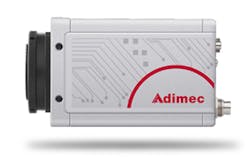
Adimec (Eindhoven, The Netherlands) has announced that its Quartz and Opal cameras have both been certified as fully compliant with the CoaXPress interface standard version 1.0, the company's first area scan cameras to earn the certification.
The cameras passed a comprehensive electrical compliancy test that began at the CoaXPress Plugfest during the Image Sensing Show (ISS) in Yokohama, Japan.
The certification allows the Adimec cameras to carry the CoaXPress-certified logo, ensuring system developers that they are fully compliant with the coaxial cable-based interface and offer plug-and-play compatibility with certified frame-grabbers.
"We are pleased that our cameras are the first to receive official certification of compliance from the standard’s organizers, and we applaud all the outstanding work they have done in making CoaXPress a commercial reality," said Joost van Kuijk, Vice President Marketing & Technology at Adimec.
CoaXPress (CXP) is an asymmetric point to point serial communication standard for the transmission of video and still images, scalable over single or multiple coaxial cables. It has a high speed downlink of up to 6.25Gbps per cable for video, images and data, plus a lower speed, 20Mbps uplink for communications and control. Power is also available over the cable ("Power-over-Coax") and cable lengths of greater than 100m may be achieved.
All of the CoaXPress compliant products are listed on the Japanese Industrial Imaging Association (JIIA) web site with many more expected in the coming months.
More information on CoaXPress can be found here.
Recent articles on interface standards from Vision Systems Design.
1. CoaXPress interface moves into the mainstream
With the introduction of faster megapixel image sensors and cameras, system integrators now require frame grabbers that support higher data rates.
2. Looking to the future of vision
Thinking ahead to standards updates and the evolving needs of machine-vision systems helps developers and component vendors get a jump on innovation.
-- Dave Wilson, Senior Editor, Vision Systems Design