3-D reconstruction algorithms win Carl Pulfrich Award
The 2011 Carl Pulfrich Award has been awarded to Dr. Heiko Hirschmueller from the Institute of Robotics and Mechatronics of the German Aerospace Center (DLR; Oberpfaffenhofen, Germany) for his work developing semi-global matching (SGM) algorithms that are used for stereo matching in vision systems.
Stereo matching is used for finding corresponding pixels in a pair of images, which allows 3-D reconstruction by triangulation, using the known intrinsic and extrinsic orientation of a pair of cameras.
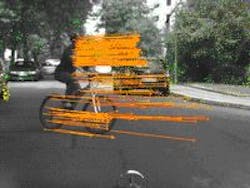
SGM is a stereo matching method that offers a good tradeoff between accuracy and runtime and is suited to many applications such as processing aerial and satellite images, 3-D reconstruction of buildings, and mobile robot navigation. The technique has also been used in the 6d-Vision system developed by researchers at the German auto maker Daimler (Stuttgart Germany) for driver assistance applications.
The Carl Pulfrich Award itself was established to recognize innovations in hardware and software in the fields of geodesy, photogrammetry, and the earth sciences. Launched in 1968, it is awarded biennially and attracts nominations and recommendations for candidates from all over the world.
Originally created by Carl Zeiss, the awards were adopted by Z/I Imaging and Intergraph and then by Hexagon Geosystems Geospatial Solutions Division (GSD; Stockholm, Sweden) following that company’s acquisition of Intergraph in 2010.
A paper written by Dr Hirschmueller from Photogrammetric Week (Stuttgart, Germany) explains the Semi-Global Matching (SGM) technique in detail.
-- Posted by Vision Systems Design