Beyond the Spiel: Who from Forbes’ Innovators 250 Truly Moves the Needle in Vision Systems Design?

The other day, my browser’s home page alerted me that Forbes announced its kickoff of a year-long campaign celebrating the USA’s 250th birthday with its Forbes Innovator 250 List, which is composed of living business leaders, founders and entrepreneurs who aren’t just inventors but have transformed entire industries and created new ones.
I was curious how many of these 250 innovators were directly related to breakthroughs in machine vision, so I began poring through the lists. There were innovators in so many domains, including but not limited to sports, fashion, finance, venture capital, social media, logistics, telecom infrastructure, consumer products, cloud software, entertainment and digital storytelling, biotechnology, retail, renewable energy, AI infrastructure, real estate, and politics of business. Trying to find machine vision innovators on the exhaustive list was overwhelming, to say the least.
So, I took to Co-Pilot, copied and pasted the Forbes link, and asked: Which of these innovators are in the vision systems design realm? It took a bit of prompt tweaking as the link itself wasn’t accessible to my AI tool, but eventually I had a list of the modern “big five” with direct impact to our industry and the current “enablers” with adjacent impact.
Top 5 Modern Innovators for Machine Vision
Here are the top five living innovators and their contributions to machine vision:
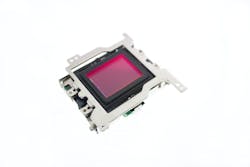
Eric Fossum put the “eyes” into nearly every camera your systems deploy by inventing the CMOS image sensor, enabling the size, power, and cost profiles that machine vision depends on.
Fei‑Fei Li made deep learning work for vision at scale with ImageNet, igniting the algorithmic revolution behind today’s defect detection, classification, and robotic guidance.
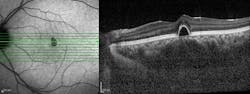
Xiaowei Zhuang pushed resolution beyond the diffraction limit with stochastic optical reconstruction microscopy (STORM) super‑resolution microscopy—proof that optics + computation can leapfrog hardware constraints, a paradigm increasingly mirrored in industrial computational imaging.
Current Enablers with Adjacent Impact on Vision Systems
These innovators and their contributions influence the ecosystem around vision—compute platforms, algorithms, materials, or sibling fields (robotics/graphics)—but they don’t constitute imaging system design as practiced by machine vision engineers and integrators.
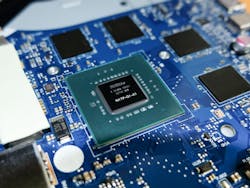
Jensen Huang’s NVIDIA GPUs remain the de facto platform for training and deploying computer‑vision models—from smart cameras to edge servers. Yann LeCun and Andrew Ng advanced the learning frameworks that your teams use daily. Moungi Bawendi’s quantum dots improve detectors/displays. John Carmack and Ed Catmull/
James Clark perfected real‑time graphics that inform simulation and visualization workflows. Rodney Brooks/Dean Kamen shaped robotics where vision is a core capability.
Other enablers include:
- Palmer Luckey—VR optics/sensors (Oculus) and defense AI; not industrial vision.
- Rodney Brooks—Robotics pioneer; vision is sometimes part of robotics stacks, but not his central contribution.
- Ray Kurzweil—OCR and pattern recognition (algorithmic perception, not imaging hardware/systems).
- Napoleone Ferrara—VEGF pathway → ophthalmology treatments; clinical optics relevance but not imaging systems.
- Jack Dangermond—GIS and spatial analytics, tangential to vision.
- Min Kao—GPS/navigation sensors; sensing adjacent, not vision.
What This Means for Engineers & Integrators
When asked what this list of modern innovations means for Vision Systems Design readers, the large language model provided the following:
- Expect continued sensor gains (thanks to CMOS lineage) and compute‑efficient model pipelines (GPU + better training data) to shrink cost/latency for edge‑deployed vision.
- Computational imaging—fusing optics, illumination, and software—will keep unlocking performance beyond traditional hardware limits (a lesson from OCT and super‑resolution).
- Recruiting and roadmap planning should track shifts in: sensor stacks, illumination optics, embedded AI accelerators, and data‑centric AI practices (dataset curation/augmentation remains a differentiator for industrial deployments).
Historic Innovators Who Contributed to Machine Vision
I’d be remiss if I didn’t mention that Forbes also curated a list of 250 historical innovators. Curiosity got the better of me, and I repeated my Co-Pilot inquiry with that list. The findings reveal that more of our past innovators were directly and tangentially responsible for advancing machine vision.
- Thomas Edison—Invented early motion‑capture cameras (kinetograph)
- George Eastman—Created mass‑market photography; foundation of camera industry
- Edwin Land—Polaroid; major contributions to optics and early digital imaging
- Joseph C. Wilson—Drove Xerox; electrophotography → digital imaging
- Chester Carlson—Perfected photocopier imaging technology
- Charles K. Kao—Invented fiber‑optic communication, enabling high‑speed imaging data transfer
- Raymond Damadian—Invented MRI; key imaging modality (medical, not industrial)
- James Fergason—Invented practical LCDs, used in vision‑system displays
- William Shockley—Co‑invented transistor, foundational to image sensors and processors
- Roger Tsien—Created fluorescent proteins → modern fluorescence imaging
- Albert Baez—Advanced X‑ray microscopy and optical instrumentation
Fnally, these individuals influenced innovations that support the vision‑system ecosystem:
- Howard Hughes—Film technology innovations
- Herman Hollerith—Data processing → digital imaging workflows
- Bill Hewlett and David Packard—HP instrumentation used in imaging labs
- Sherman Fairchild—Fairchild Semiconductor; incubator of sensor technology
- Eugene Kleiner—Early semiconductor development
- Amar Bose—Signal‑processing expertise
- Edwin Armstrong—Signal‑processing foundations (FM) used in imaging electronics
- Glenn Curtiss—Aviation (airborne imaging platforms)
- William Boeing—Aviation systems enabling aerial imaging
- Igor Sikorsky—Helicopter stability for aerial imaging
- George Devol—Father of industrial robotics → vision‑guided automation
- Edwin Link—Flight simulators → imaging simulation environments
How did Forbes and Co-Pilot do? Do you agree with these lists? Are there others who you feel contributed or still contribute to machine vision innovation? Take our survey below or reach out to me via email at [email protected].
About the Author

Sharon Spielman
Head of Content
Sharon Spielman joined Vision Systems Design in January 2026. She has more than three decades of experience as a writer and editor for a range of B2B brands, most recently as technical editor for VSD's sister brand Machine Design, covering industrial automation, mechanical design and manufacturing, medical device design, aerospace and defense, CAD/CAM, additive manufacturing, and more.