Beyond the Spiel: From Blurry Matches to Clear Insights

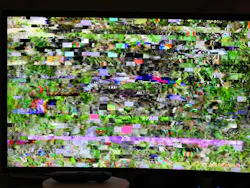
If you caught the World Cup matches on Fox (U.S.) this past weekend, you might have noticed a pixelated, blurry picture. My family sure did. I’m a bit embarrassed to admit how agitated I got, but it sparked my curiosity enough to do a little research.
It didn’t take long to discover that our household wasn’t alone. It seems that millions of fans faced frustration watching the global sporting event plagued by image quality issues—something that feels more like a relic of the past than a problem in our ultra-high-definition, streaming-heavy 2026.
For this audience, though, the frustration hits differently. You know that “bad picture” isn’t just a broadcast problem; it’s a systems problem.
From Broadcast Pixels to Machine Vision Challenges
Pixelation is rarely just a “bad signal.” It is typically the result of tradeoffs across bandwidth, latency, compression efficiency, and error resilience—tradeoffs that closely parallel those in industrial vision pipelines.
Real-time processing constraints remain foundational. Both broadcast and machine vision systems operate within strict latency budgets, limiting opportunities for post-acquisition correction. This necessitates optimized pipelines that preserve fidelity at acquisition.
Compression efficiency vs. feature preservation is equally important. While broadcast systems prioritize perceptual quality, machine vision systems must preserve analytically relevant features—edges, gradients, and textures—under similar bandwidth constraints.
Signal degradation mechanisms also align. Packet loss and network jitter in streaming environments manifest as pixelation; in machine vision, equivalent degradation arises from sensor noise, illumination variability, and motion artifacts. Both require robust reconstruction strategies.
Adaptive optimization further bridges the domains. Adaptive bitrate streaming dynamically responds to network variability, while machine vision systems adjust exposure, gain, and inference parameters in response to scene and system conditions.
Where Machine Vision Pushes Further
Engineers are responding to these shared constraints with increasingly sophisticated approaches. Let's zoom in.
Efficient Compression Without Losing Critical Features. Machine vision often faces the challenge of compressing image or video data to reduce bandwidth and storage without losing edges, textures, or important features vital for accurate detection and classification.
- Techniques like region of interest encoding prioritize key image parts.
- Custom codecs may be developed to preserve features essential for machine analysis.
Noise Reduction and Image Enhancement Under Real-World Conditions. Uncontrolled lighting, motion blur, sensor noise, and environmental interferences degrade input quality. Advanced filtering, denoising algorithms, and AI driven super resolution models help enhance image quality for downstream tasks.
Adaptive Image Capture and Processing Pipelines. Real-time systems dynamically adjust camera settings (exposure, gain) and processing parameters based on scene content and system load, balancing image quality and latency.
Robust Transmission over Networks with Packet Loss. Remote and distributed machine vision systems must implement forward error correction, retransmission protocols, and error resilient encoding to maintain image integrity with minimal delay.
Leveraging AI for Predictive and Corrective Actions. AI models anticipate quality degradation and can reconstruct lost data or enhance low-quality frames, providing resilience in variable operational environments.
These machine vision challenges are significant as more industries rely on automated visual inspection, autonomous navigation, surveillance, and medical imaging. The broadcast pixelation incident is a vivid reminder of how complex real-time image delivery can be—and why engineers must innovate to keep visual data reliable and actionable.
The World Cup pixelation issues show how global scale events put immense pressure on imaging infrastructures. From smarter compression to AI-driven reconstruction, the push is on to make vision systems more resilient, more adaptive, and more reliable under real-world conditions.
Because whether it’s a missed goal—or a missed defect—image quality still matters.
So, we’re curious: what is the biggest challenge you experience with real-time image quality in your systems, and how are you tackling it?
Update: Computer Vision Expert Weighs In
Shortly after publishing this post, I received a thoughtful response from Dhruv Datta, founder and computer vision engineer at GolfWiz AI, who builds mobile computer vision systems for real-time sports biomechanics analysis. His perspective adds an applied-technology dimension to the issues raised by the World Cup broadcast pixelation and underscores how critical image fidelity is.
"The World Cup broadcast issue is a perfect illustration of something we wrestle with constantly in sports computer vision—when your pipeline depends on clean, high-fidelity frames to extract meaningful biomechanical data, even modest degradation in image quality cascades into unreliable outputs downstream," Datta wrote.
"In golf swing analysis, for instance, a few blurred frames during a critical phase of the swing can throw off joint angle calculations entirely, which is why we invest heavily in frame quality validation before any AI model ever sees the footage. The broadcast world and the sports analytics world are dealing with the same fundamental problem: garbage in, garbage out—the stakes just look different on a stadium screen versus an athlete's performance dashboard."
Datta's insights highlight a universal truth in machine vision and AI: the quality of the input data fundamentally determines the reliability of the outputs. Whether it's broadcast screens, sports analytics dashboards, or any high-stakes computer vision application, ensuring high-fidelity frames is essential for meaningful and actionable analysis.
About the Author

Sharon Spielman
Head of Content
Sharon Spielman joined Vision Systems Design in January 2026. She has more than three decades of experience as a writer and editor for a range of B2B brands, most recently as technical editor for VSD's sister brand Machine Design, covering industrial automation, mechanical design and manufacturing, medical device design, aerospace and defense, CAD/CAM, additive manufacturing, and more.