Practical Machine Vision: Leveraging Machine Learning Tools
Key Highlights
- Traditional machine learning algorithms like support vector machines, decision trees, and k-NN are effective for many machine vision tasks and often outperform deep learning in efficiency.
- Supervised learning, especially classification and regression, is the most common approach in industrial machine vision applications, relying on labeled data for training.
- Implementing ML involves collecting representative images, selecting suitable algorithms, preparing feature vectors, training models, and iterative evaluation for deployment.
- ML tools often require manual feature engineering and structured input data, making them suitable for well-defined, constrained tasks with limited variability.
- Deep learning is preferable for complex, nonlinear, or ambiguous detection and segmentation problems, but traditional ML offers advantages in training speed, interpretability, and resource requirements.
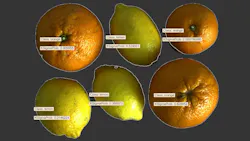
Practical and effective machine learning tools for machine vision are widely available, even to engineers who are not data scientists. Machine learning has been integral to machine vision for many years, and its role extends well beyond deep learning. If you work in industrial machine vision, you may already be using machine learning tools that aren’t explicitly identified as such. This article looks at what machine learning means in a machine vision context and where it can most effectively improve inspection performance and system capability.
ML and large-scale data analysis are central to the productivity and flexibility goals associated with smart factories, smart manufacturing, and Industry 4.0. This discussion, however, focuses specifically on the practical use of machine learning for machine vision inspection in industrial automation applications.
What Is Machine Learning and How Is It Used for Machine Vision?
At a basic level, machine learning (ML) is a branch of artificial intelligence (AI) and is closely related to data science. In practice, what matters for machine vision is that ML allows systems to learn classification or prediction behavior from data instead of relying entirely on hard-coded rules.
Deep learning is a well-known subset of machine learning and one of the most frequently discussed ML techniques. Here, however, the focus is on traditional machine learning: algorithms that learn and operate without the advanced multilayer neural networks used in deep learning.
Traditional machine learning uses statistical algorithms to build models that analyze data and generate predictions or classifications without requiring every relevant characteristic to be explicitly programmed. Data scientists research, refine, and tune these algorithms, while machine vision engineers select, train, and deploy them for specific applications. Although deep learning may be the most familiar and widely adopted ML approach, traditional ML algorithms remain well suited to many machine vision tasks and, in some cases, can outperform deep learning in efficiency or practicality. Let’s start with a high-level overview of machine learning.
Machine learning algorithms are commonly grouped by how they are trained and how they use data. The primary categories are:
- Supervised learning: learns from labeled data.
- Unsupervised learning: identifies patterns and groupings in unlabeled data.
- Reinforcement learning: learns by interacting with changing inputs and outcomes.
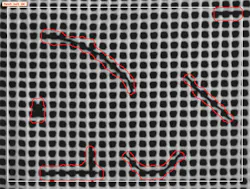
A fourth category, semi-supervised learning, is sometimes included. In addition, some algorithms, including deep learning methods and certain regression techniques, can span more than one category. All of these categories are important, but machine learning tools used in machine vision and image analysis most often rely on supervised learning which will be the main focus here.
Supervised learning algorithms most commonly perform one of two tasks: classification or regression. Classification predicts discrete labels for input data, as in object identification or defect detection from trained images. Regression is used when the output is continuous or variable, for example when estimating the remaining operating life of a mechanical component from machine data. As the name implies, supervised learning algorithms use labeled training data to learn mappings from inputs to outputs by comparing predictions against known results. The resulting learned representation, or model, is then used to make predictions on new data and can be refined over time.
The range of machine learning algorithms continues to expand. A comprehensive treatment of these methods and their implementation is beyond the scope of this article; however, the following examples are representative of techniques encountered in practical machine vision applications. Some widely used ML data-analysis tools are not especially well suited to image or feature classification and are therefore omitted here, although they may remain appropriate in selected cases.
Linear, logistic, and polynomial regression—These methods fit linear or polynomial functions to a dataset for prediction or classification. Logistic regression can support relatively simple classification tasks and may be used in limited image-classification scenarios.
Support vector machines (SVM)—SVMs classify data that are not linearly separable by projecting them into higher-dimensional feature spaces. They are well suited to feature classification, image classification, and OCR.
Decision trees—This method classifies data using rules learned from training data and organized in a tree structure with multiple binary decision nodes. It is useful for relatively simple classification problems.
k-nearest neighbors (k-NN)—This straightforward classifier stores features and class labels from the training set, then classifies new data based on the nearest examples using selected distance metrics. In some segmentation contexts it is treated as supervised learning, but related techniques can also be used for unsupervised clustering. k-NN is often effective for general feature classification and OCR.
Gaussian mixture models (GMM)—Also referred to in some contexts as Bayesian classifiers, GMMs can be used in supervised or unsupervised settings and support clustering applications similar to those associated with k-NN. They are effective in some segmentation tasks and can also be useful for texture analysis and anomaly detection, although they may be limited by the number and quality of available features.
Multilayer perceptrons (MLP)—MLPs are relatively simple artificial neural networks that are related to, but distinct from, deep learning architectures such as convolutional neural networks (CNNs). They typically use one to three hidden layers. MLPs perform well on data that are difficult to separate linearly and are generally leaner and easier to deploy than deep learning models, although they are less powerful for highly complex tasks.
Are you already using traditional machine learning without calling it that? In some cases, perhaps yes. For example, one could make a reasonable case that pattern matching, one of the most widely used machine vision tools, exhibits machine-learning-like behavior because it is trained from input data and used to classify image features. Likewise, simple regressions and convolution-based operations in other machine vision algorithms are closely related to ML concepts.
Traditional Machine Learning and Deep Learning
A natural question is whether deep learning should be used for every machine vision application. Generally, the answer is no: machine vision tasks are often well constrained and well defined, so identifying the relevant features with basic algorithms does not justify the added complexity or computational cost of deep learning.
Traditional machine learning methods for automated imaging generally require less training data and substantially less processing power than deep learning. Many ML tools can be trained in seconds or minutes. Their outputs are also typically easier to characterize, analyze, and debug, whereas deep learning results are often difficult to interpret directly. In addition, commercial machine vision libraries and open-source packages such as OpenCV and scikit-learn provide a wide range of ML tools that can often be deployed without cloud infrastructure or subscription-based services. The tradeoff is that traditional ML usually requires more manual feature engineering, more direct involvement during training and retraining, and more structured input data than deep learning.
Deep learning is most effective in applications that are highly complex, nonlinear, or subjective. As a result, its computing and processing requirements are typically higher. Training DL models generally requires larger image datasets, but often less manual engineering than traditional ML. Continuous learning and retraining are possible, although they still may require human oversight and time. In some deployments, both training and inference are performed using cloud-based resources.
In practice, traditional machine learning is often the stronger choice when classification or segmentation problems are well defined, constrained, and characterized by features with limited variability, as is common in many machine vision applications. Deep learning is generally the preferred approach when detection or segmentation is highly complex, ambiguous, or strongly dependent on context.
A Practical Workflow for Implementation
The general workflow for implementing machine learning is straightforward and maps well to many machine vision tasks:
- Collect images that represent the features of interest, reserving separate sets for training and testing.
- Select an appropriate algorithm, recognizing that multiple candidates may need to be evaluated.
- Train the model using input data prepared in the form required by the selected algorithm.
- Evaluate performance, retrain as needed, and deploy.
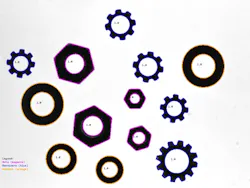
One part of this process may be less familiar: prepared input data. Unlike many conventional machine vision tools, and unlike most deep learning methods, some ML algorithms do not work directly on raw image data. Instead, they use structured numerical inputs, often called feature vectors. These features describe the objects to be classified or segmented. For these algorithms, feature selection matters: the input data must be chosen carefully so the model can reliably distinguish among classes. Useful features may include geometric descriptors, texture measures, grayscale values, or color information. The same type of feature data used for training is then used during inference.
That leads to another practical question: why not simply program rules that check each part for the characteristics that identify it? In some cases, that is the right approach. But machine learning becomes valuable when many features are needed to separate several possible classes, especially when variation within those classes overlaps. In those situations, a reliable rules-based algorithm can be difficult to design, validate, and maintain. Adding a new class may also require significant rework. Once trained, machine learning algorithms can classify complex input data automatically and can be retrained as new objects or operating conditions are introduced, subject to the limits of the selected method. To be clear, some ML algorithms are trained directly on image data. In those cases, only segmented and/or labeled images or features are required for training.
About the Author
 David L. Dechow
David L. Dechow
David L. Dechow is an engineer, programmer, and technologist widely recognized as an expert and thought leader in integration of machine vision and related automation technologies. He has had a decades-long career serving the automated imaging industry, founding two integration companies and working for others like Motion Ai, Fanuc America and Landing AI and is Principal Vision Systems engineer for the Arthur G. Russell Company.
Dechow is a recipient of the A3 Automated Imaging Achievement Award recognizing career contributions to the vision industry, is a member of the Association for Advancing Automation (A3) Imaging Technology Strategy Board and is contributing editor for Vision Systems Design magazine.
As a key educator in the field of machine vision technologies, Dechow has participated in the training of hundreds of engineers as an instructor with the A3 Certified Vision Professional program since its origin. He also is well known for his frequent informative technical articles, papers, webinars, and conference sessions and classes covering a wide range of technical topics involving machine vision and associated enabling technologies in industrial automation.