VISION 2026 Stuttgart Preview: Advances in Machine Vision and Imaging Systems
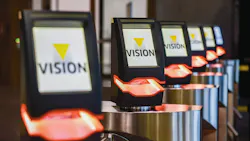
From Oct. 6-8 in Stuttgart, Germany, VISION 2026 will gather machine vision technology providers to present developments that respond to evolving requirements in automation, robotics, and industrial inspection. The show highlights a shift toward integrated hardware, software, and embedded intelligence designed to develop precision, throughput, scalability, and security in complex manufacturing environments. Vision Systems Design will be there with a special print edition of our Fall 2026 issue. Be sure to pick up your free copy in Booth 10C02. Meanwhile, here is just a taste of the technology you’ll see at the show.
READ MORE: Join the Machine Vision Community at VISION 2026 this October in Stuttgart | Vision Systems Design
Flexible Imaging Hardware for Complex Applications
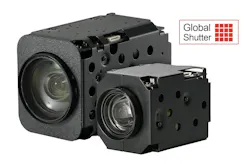
Active Silicon expands its Harrier camera range with 10x and 30x autofocus-zoom global shutter models equipped with Sony’s 3MP Pregius S sensor. These cameras capture fast-moving subjects without rolling shutter distortion and support diverse outputs like USB 3, HDMI, and Ethernet IP, fitting use cases in UAVs, remote monitoring, robotics, and transport applications. Booth: 10F59
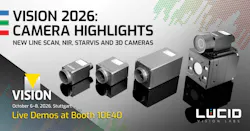
LUCID Vision Labs introduces an 8K line scan camera featuring 10GigE connectivity, alongside near-infrared enhanced models using Sony IMX900 sensors and factory-calibrated Helios2 Chroma RGB-D cameras. These address applications that include automated optical inspection, material sorting, robotic spatial awareness, and logistics automation. Booth: 10E40
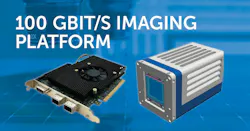
Teledyne Vision Solutions demonstrates a high-throughput imaging platform based on the Sony IMX927 sensor with CoaXPress over fiber interface, delivering data rates up to 100 Gbit/s. This platform targets advanced semiconductor inspection where sustained bandwidth and thermal stability are critical. Booth: 8B10, Hall 8
Embedded Intelligence and Standalone Monitoring
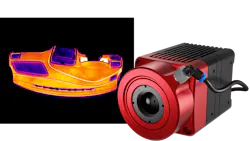
AT Sensors’ IRSX-2 integrates temperature measurement, evaluation, and communication within a single IP67-rated unit, with no additional hardware or software required. Its app and job concept enables multiple inspection routines to run on the camera, supporting applications such as early fire detection and component quality control. Communication occurs via standard Ethernet and IoT protocols for integration with machine controls and visualization platforms. Booth: 10E55
Integrated Systems and Scalable Networking
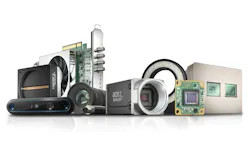
Basler AG presents a portfolio where cameras, lenses, lighting, and software function as integrated systems. Examples include AI-powered OCR and barcode recognition on moving objects, centralized lens and lighting control, and setups with IP67-certified components suited for harsh industrial environments. Their ace 2 10GigE and racer 2 S cameras enable high-speed, high-throughput inspection workflows. Booth: 8D50
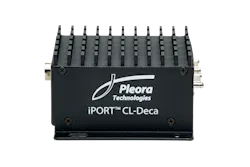
Pleora Technologies Inc. introduces the iPORT™ CL-Deca external frame grabber, which enables legacy Camera Link cameras to operate within GigE Vision networks via standard 10 Gigabit Ethernet infrastructure. This extends camera-to-host distances up to 100 meters and supports distributed, scalable imaging architectures without requiring camera replacement. Booth: 8B02
Security and Manageability in Vision Software
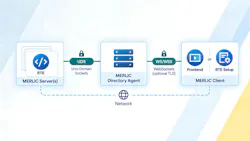
MVTec’s MERLIC 26.10 redesigns communication to emphasize security and manageability. It implements encrypted connections over WebSockets, uses Unix-domain sockets for local communication, limits remote access by default, and provides Software Bills of Materials (SBOMs) in SPDX format. These changes address the importance of cybersecurity and compliance in connected industrial vision systems. Booth: 8C56
Unified Components and Application Expertise
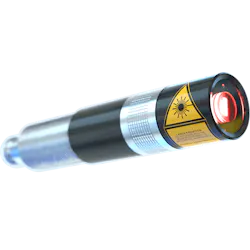
Exaktera consolidates multiple specialized vision technology brands to offer LED lighting, lasers, optical measurement systems, and protective enclosures in a single portfolio. Their integrated application expertise helps reduce system design complexity and supports faster, more reliable vision system development across industries. Booth: 10C50
Photonic-Based Inspection with AI and Optics Synergy
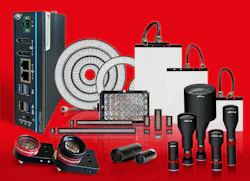
Vision & Control combines custom photonic systems with AI-powered defect detection and high-speed vision. Their demonstrations include deep learning applications for robust inspection of complex or subtle surface defects and telecentric illumination designed for measurement consistency and repeatability at high production speeds. Booth: 10B87
About the Author
 Sharon Spielman
Sharon Spielman
Head of Content
Sharon Spielman joined Vision Systems Design in January 2026. She has more than three decades of experience as a writer and editor for a range of B2B brands, most recently as technical editor for VSD's sister brand Machine Design, covering industrial automation, mechanical design and manufacturing, medical device design, aerospace and defense, CAD/CAM, additive manufacturing, and more.