How AI Vision Helps Spot Counterfeit Sports Merchandise
Key Highlights
- Learn how AI-powered vision systems help detect counterfeit sports merchandise.
- Discover how machine vision verifies labels and packaging at high production speeds.
- Hear how automated inspection helps maintain quality during peak seasons.





In this episode of Visions: A Machine Vision and Automation Solutions Podcast, host Jim Tatum talks with Charlie Long, VP and GM of Machine Vision at Zebra Technologies, about how AI-powered vision systems detect counterfeit sports merchandise, verify labels and packaging, and maintain quality at high production speeds during peak seasons
Visions: A Machine Vision and Automation Solutions Podcast, is the podcast for engineers, designers, integrators, and end users who want to keep an informed eye on the imaging and machine vision industry. Every Tuesday we will explore the latest in imaging trends, developments and solutions. Here you will find interesting, useful insights and observations from expert interviews, solo episodes, even the occasional panel discussion, all of which aim to expand your knowledge on imaging and machine vision.
Transcript
Hi everybody and welcome to Visions. Today we're going to take a minute to go from the factory floor to the football arena. Here in the U.S. we're in the height of college football season, among other things, with bowl game fever and national championship mania rampant. Now, no matter what the sport, every championship season brings a surge in demand for team merchandise, from jerseys and hats to collectibles and apparel. But with that surge comes a growing challenge, and that is ensuring every product that reaches fans is authentic, defect free, and worthy of the team logo it carries. So today, we're pleased to welcome back to Visions Charlie Long, vice president and general manager of machine vision at Zebra Technologies, to explore how Zebra AI powered vision systems are helping manufacturers and distributors detect counterfeit goods, verify labels and packaging, and maintain quality at high speeds during peak sports seasons. We'll discuss the latest advances in machine vision, where AI is outperforming traditional inspection methods, and what it takes to protect both brand reputation and the fan experience. Welcome back Charlie. Thanks for being with us and great to see you again.
Likewise, Jim. Thanks for having me.
All right. Um, all right. We'll just jump right into this. Um, counterfeit merchandise often looks nearly identical to authentic products. I guess it has to in order to sell it. Um, but what are some of the most common defects or labeling errors that traditional rule based inspection systems miss? But AI based vision systems are successfully identifying and what product or service is zebra bringing to the table with this?
Yeah, I think that's an interesting question, Jim, because the problem with trying to detect counterfeits, especially or defective merchandise, um, because it's not always counterfeits we're looking for. It's when you see shifts in demand or, you know, you mentioned a minute ago when a different team makes it to a bowl game that we were expecting. The demand goes up for something you hadn't built in advance, right? So, um, and traditional rules based machine vision, it was very hard. It's very hard to adjust for the unknown, right? And that's where AI based tools really come in, is understanding that you're not always going to know what that minor difference might be, right? You can set up regions of interest and look at an entire garment instead of going, oh, did this common label misprint that we expect or this common color problem that we expect come up when somebody has already gone back and fixed that? Instead, we can look at a piece of apparel in its entirety and, you know, really compare against the known good and, you know, adapt for the unknown. So that's where we're doing this in a lot of logistics applications, especially, uh, returns classification from the Zebra perspective, because that's the other big thing you have to watch out for, right, is you bought a good that was authentic when you bought it, but the customer may have sent you back something that's not authentic, right, as a return against an expensive item. So that's where Zebra is really jumping into this space is both at pack stations and returns classification using AI anomaly detection to look at a full garment in its entirety and do 100% inspection instead of just the key areas that we might know where problems have been in the past.
Okay. Um, so is it just any one particular system you're using or are there? I think last time we talked, we were talking about, inspections and inventories and stuff using handhelds and things like that, but what are some of the systems you have in place for this? what is being used the most?
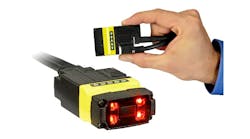
Primarily we're attacking this two different ways. Um, one way for, for high volume and lower cost of deployment is we're using our NS 42 Smart Sensor. This is a NPU powered AI on the edge sensor that can do anomaly detection. and it's easy to set up right. It's a point and click operation. Right. So um, so that's what we're using for quick deployment. Lower cost of ownership. When you get into situations where you need really high accuracy, that's where we can pivot on the same platform and the same tool base to higher resolution PC based systems that operate in the same realm and set up, almost as easily the RPC based. There's a little bit more in the infrastructure. but we provide the full infrastructure, of course, but that's going to be like our CV70, um, that we're recently showing at automate where we can put, you know, a couple hundred megapixels across a single garment and get the finest detail down to, you know, misplaced stitch, if you will.
Okay. well, to go further into that, what visual features are AI powered vision systems using today to distinguish genuine team merchandise from knockoffs? you just mentioned a couple of your products. You know, what are some of the things that they're doing?
Yeah. So that's also a great question. Generally what we're looking at is color and material quality, right? And, construction and placement right there. Obviously simple things we can look at. There's trademarks and that kind of thing that have to show up in the right place in the right orientation. And that's something that you don't have to know exactly what you're looking for. You just put known good garments in front of the system and train it on those known goods, and then it'll look for those subtle differences. But then what we see most of the time in counterfeit is going to be a little bit lower construction quality, you know, uh, Different sized label, you know. Uh, different size patch, um, different placement and those kind of things show up very easily, um, in these anomaly based or classification based tools. But the interesting thing about looking at it with AI is you can also take a composite score, right? Instead of looking for one thing to be wrong, it's maybe, a combination of small defects that add up to be, a suspect item, right? This is a little bit off that's a little bit off. We can score those anomalies through segmentation and combine an overall score to say, yeah, this garment is probably not what you would expect. at the same time, I think something that's important to keep in mind is that we're also deploying the same systems at the manufacturers, right? So if you're making these garments, you've got to make sure that if you're the licensed Supplier that you can produce at the expected quality level. That way, you know, there's quality across the supply chain. So we're seeing the same deployments at the suppliers of especially licensed merchandise to make sure they're meeting the requirements of the licensee.
So okay. Okay. Interesting. Okay. for manufacturers that produce merchandise for more than one team or, you know, even leagues, um, and events, um, how division systems such as what y'all are doing adapt to frequent logo packaging and labeling changes without requiring that training.
Right. So when, when you look at, uh, sports, especially, right, you mentioned, when we started off college football in the World Series, right? Nobody expected the Dodgers to be out in four on their way to the World Series. Right. So, I imagine that pushed for some additional, rays orders, that were not expected by the suppliers. And what we've done is we've really focused on ease of deployment in both our simple and complex, or higher capability machine vision systems, I should say that way you can adjust more quickly to, you know, now we've got a championship patch on here we weren't expecting or we've got World Series shirts and work that we weren't expecting, with the different team logo. where we make it very easy to go back and adjust for those unknowns, um, or even to adjust for a new product in the market we didn't expect, right? There's a new supplier that just dumped a bunch of, counterfeit in that looks like it's, we can look for that as well, uh, just through ease of deployment, ease of tool adjustment. The other thing is the intuitiveness of the tools. We do look at, historical, images and triggers to go back and say, hey, we're seeing this anomaly that you're not necessarily looking for right now. Uh, can we get a human interaction to tell us whether this is good or bad? So we can adjust the system's intelligence based on that human in the loop feedback, which is really important.
That kind of answers my next question too about, uh, major seasonal demand spikes. how does a manufacturer increase inspection throughput without sacrificing accuracy or creating bottlenecks on the line?
Yeah, I think that's you're right. I maybe jumped ahead a little. Jim. Sorry. But ultimately it's, uh, it is a little bit more of the same, right. But I think something to keep in mind there is that, uh, five years ago, this wasn't possible to deploy this quickly with this level of accuracy, right? So I think it's important for our supplier.
Yeah. Yeah. Incredible jump in technology.
Yeah it is. Pardon the pun, but the goalposts continue to move for what it is. Right. So and that's where we've been able to react to that and constantly keep up with new foundational models that, you know, understand more about what you put in front of the vision system as opposed to expecting you to train it. we're able to distinguish a lot more subtle changes at this point that we were able to do even just a few years ago. Um, and that is making the speed of deployment much easier and the barrier to entry much lower for suppliers that maybe never considered machine vision before, that were only using manual inspection. And ultimately that's leading to speed in production, right? If you're looking at manual inspection, you can imagine, um, sports apparel specifically is produced at really high volumes at a really quick ramp. Sure. If you've got to stop and try to train twenty five QA inspectors online, that's going to take you days or weeks to get them proficient and your fallout is going to be much higher if you're focused on quality versus we can spend a couple of hours training the automated inspection system or the machine vision system on it, and you're ready to go immediately without having to add any inspection from the human side.
Yeah, that was kind of my next follow up. what is the time differential from five years ago? And now you're saying from weeks to hours, weeks to hours.
if you think about five years ago, five years, it doesn't seem that long ago, but realistically, five years ago, we were still, you know, setting up edge tools to check the position of a label and dimension, the size of a patch and those kind of things to make sure that, it matched the specifications that we knew versus now we're deploying a segmentation tool across the entire field of view and letting the, uh, the AI do the work on, on what differences it sees and what's expected in normal manufacturing. So that's what changes that from one, having to spend days or weeks deciding on what the specification is to two, having to spend another, you know, days or weeks getting that programmed into your inspection system versus now you can get AI feedback on what the inspection criteria should be, and then a quick deployment based off of known good subjects to look at.
Okay. I mean, it almost sounds like there's no excuse to buy a counterfeit unless you just are looking for a real deep discount.
Yeah. No, I mean, I think the other thing that gets missed in the supply chain is as vendors try to pick up more supply, when there's been that sudden spike in demand, what primarily we're using machine vision for is to make sure they don't end up with a supplier that's giving them counterfeit. And then the consumer ends up with counterfeit by mistake when they are paying full price.
Okay. where would you say, then, machine vision, particularly AI powered, today's machine vision delivers the greatest ROI in this in sports merchandise production. Pretty much across the board or any one place?
So, as far as ROI concerned, where we primarily see the quickest ROI is going to be around your traditional pipe bench applications, right? Because when you're looking for ROI, you're looking for your biggest area of mistake, right? So and this comes down to making sure you got the right item in the right box, going to the right customer, because that's the other area that commonly gets missed. Sure, we can do the detailed inspection to find counterfeits and inspect for quality and make sure we've got the manufacturers held the task, but a lot of times the person packing the item has no idea what the difference between a Clemson Tiger and a USC Spartan is.
Right.
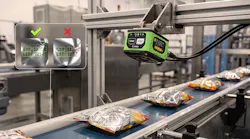
So as they're putting the item in the box with a classification algorithm running on the edge, we can make sure that we've got the right product going in the right box to the right customer with one hundred percent accuracy in inspection. Right. So that's one of the areas where we see the fastest ROI because we're not dealing with returns and unhappy customers and bad reviews because we're making sure the right thing gets in the box and it gets in there quickly. The other thing with that is moving to an automated packstation, you're reducing the need for an operator to hold a scanner in their hand or slow their process down. Right. So where we're inspecting everything that comes onto the table and into the box, and we can do that also with multimodal inspection, either through machine vision, uh, barcode reading or RFID.
Okay. All that's on the line then. You're saying no hand helds.
Yeah. No handhelds. Right. You're doing all that with fixed mount reading. So you're speeding your operators process up because they've gone completely hands free at that point. As far as the devices they have to manipulate, we typically see a 30% increase in pack rate when we go to fixed mount reading versus handheld. And you can imagine that when you're picking and packing, if you can increase by 30% across, you know, one hundred different packers in a facility, then the amount of throughput you can increase, especially when reacting to increase in demand is phenomenal. So that's where that ROI comes from. When you're packing 30% more, you know, every three people gives you another packer online. Uh, ostensibly.
Wow. Okay. are there other roles machine vision can play besides what you just described.
Yeah. I think something to keep in mind is we constantly look for, especially on the machine vision, side of things, what we can see, right? So we, and that's mainly what we've talked about, right? But a lot of times machine vision can see what we can't see, right? So take hyperspectral imaging, right? Hyperspectral imaging, uh, which I'm sure you're familiar with, Jim, is going to allow us to see contamination or variation in material that you wouldn't be able to see, on the surface or even by the color if you're using a standard RGB camera, right? That will of course, also pick up moisture and that kind of thing in packaging. and the other piece is dimensioning, right? So when you're looking at, uh, efficiency and packout, we're doing a lot in the 3D space now to make sure we're using all of the tote or all of a packaging, container that's going to go to a customer, right? To make sure that you're running the highest level of efficiency. 3 PLs and large freight companies spend way more or parcel post companies spend way more on shipping empty air, um, than they do, making money on shipping actual product. And that's one of the areas where 3D makes a huge difference.
I guess this would really kind of depend on, you know, individual criteria, but how does one determine whether a defect or a product variation is meaningful enough to impact brand integrity versus something that fans probably don't notice or the general population, whatever.
Yeah. No, absolutely. I mean, that's where, um, I mentioned this a little bit earlier in our conversation, Jim, but that's where the human in the loop is important. Yeah. Right. Because we're going to give you on the typical defect to score, right? It's not a binary go no go. Right. So and that's one of the common misconceptions with AI is it's a black box. And that's because some AI systems are a black box, right? It's, it's either good or bad. You have no ability to tell it, n, no, I'm okay with that. Where we've really focused on being able to have the human in the loop and adjust that inspection based off your criteria, right? So you'll be able to see in our software a clear threshold of where the good and the bad inspections are falling. You'll be able to see if those overlap too much, meaning it's maybe not the best candidate for the, lighting or AI scenario that you're using. but then you can do annotation on those good and bad images to make sure that we're finding what's important to you and, passing what's not important to you. So it's really user defined. if you choose to go into that annotation, phase of the AI inspection.
Okay. well, with that in mind, do you have any other thoughts or things you think we should add to this conversation? Anything I'm missing?
No, nothing that you're missing specifically from this. But, uh, one thing I'd like to to add is if we look at where we're going, right. I mentioned how much we'd advanced in the past five years. Yeah. Um, well, that half life of advancement continues to decrease, right? So we've got some, very exciting, launches coming in the beginning of twenty seven that I'm sure. Jim, you and I will be back together and talking about, around the beginning of the new year and a lot of that's going to be, directly linked to how quickly we're moving in AI development, right? So I think the important thing to remember is Zebra did make the top ten list of AI ready companies. And we've doubled down on that and continue to invest in that development. And we've got some really exciting projects coming at the beginning of the year that are going to drive both ease of use and capability, specifically in the machine vision sector. So a lot of good things coming on the horizon.
About the Author
 Jim Tatum
Senior Editor
VSD Senior Editor Jim Tatum has more than 25 years experience in print and digital journalism, covering business/industry/economic development issues, regional and local government/regulatory issues, and more. In 2019, he transitioned from newspapers to business media full time, joining VSD in 2023.