From Humanoids to AI Vision: Automate 2026 Signals a More Integrated Future
Key Highlights
- Humanoid robots are transitioning from concept to practical deployment, with live evaluations of various platforms at the NVIDIA-sponsored pavilion.
- Integrated automation solutions now combine robotics, vision, sensing, and mobility into single hardware packages, reflecting a move away from isolated technology silos.
- AI enhances machine vision with improved classification, segmentation, and defect detection, but requires careful system design and hardware considerations.
- Edge computing and multimodal sensing enable real-time data processing and environmental understanding, crucial for autonomous mobile robots.
- Advances in optics, lighting, and standards remain vital, supporting complex systems and interoperability across diverse automation technologies.

Automate 2026, taking place June 22-25 at McCormick Place in Chicago, will provide a comprehensive view of advancing technologies in machine vision, image processing, robotics, and automation integration.
Humanoids Enter Real-World Evaluation
A notable addition this year is the Humanoid Robot Forum, which offers a closer look at humanoid robots transitioning from concept to practical deployment. Alex Shikany, executive vice president of A3 told Vision Systems Design, “[Humanoids are] kind of moving from the initial hype and concepts and kind of proof of concept into more practical applications and evaluation of companies.”
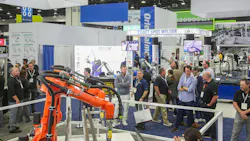
Attendees will have access to a range of humanoid platforms showcased in the NVIDIA-sponsored pavilion, allowing them to directly evaluate how these robots might fit into their own applications.
Integrated Automation Replaces Single-Technology Systems
Shikany described a growing trend toward integrated automation solutions, noting that today’s projects often combine multiple technologies into single systems.
“Back in the day, it was, ‘I may need just a robot,’ or ‘I may need just a vision system’... but at a show like Automate...you get to see in one hardware package with a humanoid robot—vision systems, sensing, articulation, robotics, mobility—in one package,” Shikany said. This convergence reflects the reality that automation no longer happens in isolated technology silos.
AI Elevates Vision Performance
In the machine vision domain, systems have evolved beyond simple pass/fail inspection to more intelligent, adaptive applications. “Traditional machine vision is going more from simple pass-fail inspection applications to a more flexible, dynamic, adaptive, intelligent understanding environments,” Shikany explained.
He said that AI and deep learning expand vision capabilities substantially but stressed they must work within the context of overall system design. “It needs to come together in the whole picture with good system design, the proper hardware that it’s using, the lighting conditions, all of that.”
Speaking on AI specifically, he said that vision systems have made advances in classification, segmentation, and defect detection. “AI vision can do so much more in terms of classification and detection and different types of segmentation and defect detection... It can do those things better now than it could in previous years, and...at greater speed and with more accuracy.”
However, he cautioned, “It’s not one-size-fits-all,” and encouraged engineers to combine AI exploration with foundational vision principles.
Edge Computing and Multimodal Sensing Enable Real-Time Decisions
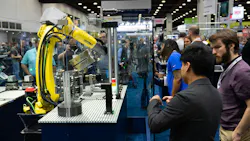
Edge computing was highlighted as a key enabler for real-time data processing: “Low latency...you need good data quickly, real-time data...and edge computing certainly makes that easier to do... because of where the computing is taking place on [the] device,” Shikany said. This is especially important in complex environments with autonomous mobile robots and dynamic workflows.
Additionally, multimodal sensing is becoming more prevalent as systems combine vision with complementary sensors—3D sensing, force and torque, thermal, acoustic, and more—to improve environmental understanding and decision-making. Shikany summarized this development simply: “In today’s world, data is king.”
RELATED: Exploring Innovation at Automate 2026: Humanoid Robots, Machine Vision, and More
Optics, Lighting, and Standards Remain Foundational
Optics and lighting remain fundamental to vision system performance. Despite the rise of AI, Shikany said, “the advent of AI... has [not] decreased the importance of... optics and lighting,” and noted that the Automate show will feature advances across a spectrum of technologies including multispectral, hyperspectral, and thermal imaging, plus improvements in industrial lenses and filters.
With system complexity growing, interoperability and standards implementation are important topics. Regarding humanoid robots, Shikany shared that efforts on dynamic stability standards are ongoing. “The work on the dynamic stability standard for humanoid robots is still ongoing, we’re still plugged in with that effort.” On general automation interoperability, he highlighted the need for different technologies to work together seamlessly: “It’s increasingly important for them to be able to deploy those various technologies…and be able to control them in concert with one another.”

Tech Ed, Demos, and Networking Round Out the Program
For professional development, Automate offers extensive conference programming, covering vision fundamentals to advanced topics. “The Certified Vision Professional Basic Curriculum courses are phenomenal for getting started, raising the bar of your knowledge on your team,” Shikany said. Advanced sessions provide deeper technical coverage for experienced engineers. He also pointed to content exploring AI’s impact on vision, hyperspectral imaging, and real-time system integration.
Beyond formal sessions, the Innovation Stage, Automate Show Theater, and NVIDIA-sponsored demo stage at the Humanoid Robot Pavilion will provide free access to live demonstrations, panel discussions, and vendor presentations.
Keynote sessions each morning provide context on industry trends and challenges. Additional networking and award events such as the Engelberger Awards Ceremony complement the program.
Vision Systems Design will present its 2026 Innovators Awards on the Innovation Stage (Booth 19046) on Monday, June 22, at 11 am CDT and will have boots on the ground for the remainder of the show. Hope to see you soon in Second City!
RELATED: Automate 2026: Educational Opportunities and Innovation Highlights
About the Author
 Sharon Spielman
Sharon Spielman
Head of Content
Sharon Spielman joined Vision Systems Design in January 2026. She has more than three decades of experience as a writer and editor for a range of B2B brands, most recently as technical editor for VSD's sister brand Machine Design, covering industrial automation, mechanical design and manufacturing, medical device design, aerospace and defense, CAD/CAM, additive manufacturing, and more.