Machine Vision Insights from Industry Experts on Three Decades of Progress
Key Highlights
- Machine vision has evolved from proprietary, expensive components to standardized, affordable solutions driven by advances in CMOS sensors and imaging protocols.
- Key technological milestones include the rise of CMOS cameras, LED lighting, SWIR imaging, and the integration of AI, transforming automated inspection and industrial applications.
- Experts predict continued hardware commoditization, smarter systems with on-the-job learning, and broader adoption of SWIR imaging fueled by AI and emerging sensor technologies.

Vision Systems Design is celebrating a major milestone in 2026: 30 years of covering the machine vision and imaging industry.
VSD began as a spin-off of sister publication Laser Focus World. While machine vision may seem like a specialty market to some, it is in fact a robust, growing, multi-billion-dollar industry that clearly merits a publication dedicated exclusively to its coverage.
Still, 30 years is a long time, and too often the present can seem a little slow—even static—until it becomes the past.
A quick AI search will instantly generate a reasonably accurate timeline of machine vision’s evolution. In brief, research into image processing and pattern recognition—the foundations of applications such as automated inspection—began in the 1950s and 1960s. Industrial adoption accelerated in the 1980s and 1990s, while neural networks and deep learning expanded machine vision’s capabilities by 2010. Today, AI-powered platforms continue to push applications to new levels.
Such an exercise is helpful, if for no other reason than it illustrates that the sheer power, not to mention convenience, of technology has advanced, almost unimaginably so, from just a few years ago. But a much more interesting exercise is to see the past, present, and future through the knowledgeable eyes, deep experience, and informed viewpoint of people who have seen the timeline unfold—first person and in real time.
With that in mind, Vision Systems Design reached out to its editorial advisory board and asked them to take a quick gander in both their personal rear-view mirrors and crystal balls and share a few thoughts and reflections. Specifically, VSD wanted to hear their takes on such technology areas as automated inspection, SWIR/non-visible imaging, and AI.
The following board members weighed in: Tom Brennan, president of Artemis Vision; David L. Dechow, principal vision systems engineer with Arthur G. Russell Company; Dr. Rex Lee, president and CEO of Pyramid Imaging; John Merva, retired industry consultant, JJMerva & Associates; Dr. Daniel Lau, IEEE Fellow, professor of electrical and computer engineering and the director of graduate studies in electrical engineering at the University of Kentucky; William Schramm, president, PVI Systems; and Matthew Wilton, director, AIET Group UAE.
Machine Vision Then…
“The machine vision and automated imaging environment has changed significantly in three decades,” says Dechow, “Technologies, and even markets, were vastly different.”
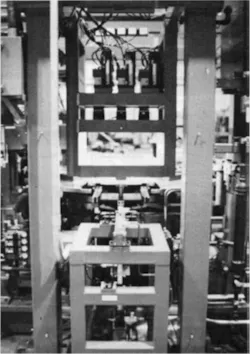
Lee says, “Looking back 30 years in our industry feels like looking back to the stone ages,” he says. More specifically, he recalls that “the industry was very narrow and specialized. Components were expensive and proprietary with practically no standards. I remember selling 1MP cameras for close to $10,000 and the LVDS cables all custom fit for whichever frame grabber was going to be used. Cables could cost over $800 and take many weeks for delivery. CMOS cameras didn't exist; everything was CCD.”
Merva says he remembers that by 1996 application specifics were becoming more of a common requirement when it came to developing applications such as inspection systems.
“Early on, machine vision customers expected the vision system to detect all defects similarly to how a human would,” Merva says. “Customers often expected vision systems to do more and more as system installation and buy-off progressed. A well-written specification, including samples of good and bad parts mitigated these problems.”
Wilton adds to this, pointing out that “30 years ago, automated inspection was a tightly engineered solution to a narrowly defined problem. The camera, lighting and part presentation were fixed, processing power limited and the result was a simple pass or fail. The system did its job, but operated in isolation from the wider production process.”
Camera, Lighting, Application
The past three decades have seen dramatic changes in camera technologies, Dechow says. The rise of CMOS sensors, yielding higher speeds and resolutions, and the availability of a variety of high-speed and reliable image transfer protocol standards such as GigEVision, USBVision, Camera Link, and CoaXpress, all supported by GeniCam, which is another standard that revolutionized imaging, he says.
In addition, quality, efficient illumination using LED lighting has substantially increased the success of vision applications, Dechow adds, further noting that SWIR and non-visible imaging cameras and systems have become standard components benefiting many machine vision applications.
Brennan agrees, noting that “AI, CMOS imaging, thermal imaging and LEDs are probably the biggest technologies of the last 30 years. They've opened tons of doors for new applications.”
“And, automated inspection has become almost a requirement in manufacturing rather than just something to be considered,” Dechow adds.
Lau says that much progress has been made over the last 30 years in visible and non-visible imaging. Market demand generally drives improvement, advancement, and scalability. That said, while non-visible options are much more affordable than they once were, they are still more expensive than visible imaging cameras, he says.
“Visible-light cameras are inexpensive, high-resolution, and capable of high frame rates because they are built on the same silicon CMOS manufacturing lines used for mainstream computer chips,” Lau says.
SWIR cameras, by contrast, require different light-sensitive material, usually indium gallium arsenide (InGaAs), that have to be manufactured on specialized, lower-volume production lines and bonded to separate silicon readout chips. Consequently, these extra manufacturing steps increase cost, reduce yield, and limit resolution, leaving SWIR cameras typically significantly more expensive than visible-light systems, Lau says.
Nonetheless, Lau says, SWIR imaging does offer capabilities that visible cameras do not. For example, SWIR can see through fog, smoke, dust, many plastics, and even silicon, while also distinguishing between materials that appear identical to the human eye. These advantages have made SWIR valuable for a variety of applications, from defense and semiconductor inspection to materials sorting, agricultural grading, and scientific imaging.
Since its commercial emergence in the 1990s, InGaAs-based SWIR technology has steadily improved through advances in detector performance, room-temperature operation, and machine-vision integration, helping expand its use despite its premium cost.
“SWIR stayed expensive because it was shut out of the silicon manufacturing that visible imaging relied on,” Lau says. “Over the past 30 years, it has steadily worked its way toward that manufacturing base that over the next 30 will further be driven by AI's demand for richer data, turning SWIR from a specialized, costly tool into something far more affordable and widely used.”
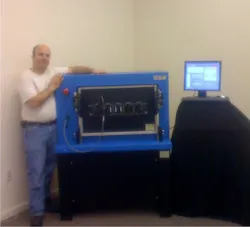
“Beyond the obvious benefits of increased resolution and speed of acquisition, one of the most significant changes has been the development of vision utilized in 3D profiling applications,” Schramm says. “There have been multiple technologies that have been developed to help do 3D scanning, such as variations of triangulation via stereo vision, structured light, time of flight scanners (and) LiDAR.”
Wilton notes that inspection has evolved to become a source of manufacturing knowledge.
"Modern systems retain images, link results to individual parts or batches, monitor variation and identify process drift," Wilton says. "Rule-based vision remains highly effective for clearly defined tasks, while AI extends what can be automated where defects vary in shape, texture or appearance. It also helps classify defects and reveal patterns across production data that individual inspection results would otherwise miss."
WIlton also notes that machine vision has also moved into metrology.
"Better optics, higher-resolution sensors, structured light, laser profiling and 3D cameras now allow dimensional and surface measurements to be made automatically within inline processes," Wilton says. "Manufacturers can measure more parts, more often, and see variation as it develops."
What about AI?
Dechow notes that AI had been around for a few decades by 1996 but had very little impact on automated imaging.
“Perhaps most visibly, AI became a prominent part of the landscape around 2014 with the development of the technique called deep learning with convolutional neural networks,” he says. But by 1996, the only broadly successful use of AI in inspection he recalls had already happened in the 1980s with the development of imaging systems that could read handwritten characters.
Merva says he does remember Acuity Imaging releasing its Mentor product around that time.
“As far as I know, this was the first product to utilize neural networks, the predecessor to AI,” he says. “Mentor had a couple of weaknesses but nevertheless ushered in the technology for detecting vaguely described rejects.”
One area that has also evolved over time for machine vision, especially in inspection systems, is lighting. Merva said that in 1996, he was general manager of RVSI, which had acquired Northeast Robotics, and was one of two companies providing LED lighting in machine vision applications at the time.
“All lights were red because red LEDs were practically the only ones available,” Merva says. “It turned out that red worked really well with the camera sensors response of that time. Lighting geometry was a unique feature offered only by NER. DOALs and Cloudy Day illumination (diffuse lighting techniques) solved applications that were previously not doable. We created the first illumination for machine vision training to help our distributors properly recommend products and help customers understand why illumination geometry mattered.”

What Is the Future of Machine Vision?
The general consensus seems to be that machine vision is, for the most part, evolving largely as expected.
“The industry is following a traditional evolutionary path for technology—proprietary products evolve to products adhering to standards,” Lee says. “Increased usage drives lower pricing. Increased technology development will yield higher resolutions, higher light sensitivities, and smaller SWAP-size, weight and lower power consumption.”

Brennan says that over the next one to three decades, he expects to see, “a lot of the current hardware commoditizing and more solutions-oriented companies ascending.” Nonetheless, he also says he sees opportunities in hardware.
“For instance, there are huge opportunities to re-invent the flat sensor, traditional lens, traditional frame/exposure concept,” Brennan says. “The Lytro was before its time, but I see a need for a versatile image- anything-at-any-depth sensor. I think you'll also see a more fragmented market of purpose built devices from commodity hardware.”
Lee notes that until recently, hardware development has seen the most frequent changes over the past 30 years.
“Software, which has been required for implementation of a machine vision solution, has been slower to evolve,” he says. “However, the advent of AI has dramatically changed that. I believe AI adoption for pattern recognition, analysis and action will be the primary driver for next generation machine vision solutions for at least the next decade.”
Nonetheless, Lee says he believes the continued lowering of costs and SWAP of hardware and the adoption of AI will create more use of swarms of imagers.
Schramm pointed out that the addition of AI and increased computing power will advance development of increasingly better real time 3D measurement systems.
“The intelligence and decision-making ability of the vision systems will, of course, grow alongside the sensor technology resulting in systems that can be trained with much higher-level input than is used today. The systems will be able to continuously improve themselves by ‘on-the-job training’ as they are able to make use of more data,” Schramm says.

Lau says that in the case of SWIR/non-visible imaging, market demand may be an important driver, but AI will be the accelerant. SWIR imaging remains more expensive than visible-light imaging, but its unique capabilities often justify the cost, he says. In fact, AI could dramatically increase demand for SWIR because AI systems benefit from access to new types of image data beyond traditional RGB imagery.
Because SWIR reveals information about materials, tissues, and objects that visible cameras cannot capture, it may become an important tool for advancing AI applications in healthcare, agriculture, autonomous systems, materials science, and industrial inspection. Also, emerging technologies such as quantum-dot and thin-film photodiode sensors aim to eliminate expensive production steps while offering smaller pixels and broader spectral sensitivity.
“If these approaches succeed, SWIR sensors could follow the same cost-reduction path that made visible cameras ubiquitous, creating a cycle of lower prices, broader adoption, increased investment, and further innovation,” Lau says.
Wilton says he believes computer vision will evolve far beyond the inspection systems of today, with advances in AI, robotics, and sensing enabling production of machines capable of perception, interpretation, and response to less structured environments.
"Vision will no longer sit at the end of manufacturing; it will become one of the senses through which industry understands and controls itself," Wilton says.

“Bottom line is that the needs of the marketplace and the benefits provided always dictate what technologies take their place as standard choices for implementation,” he says.
About the Author
 Jim Tatum
Jim Tatum
Senior Editor
VSD Senior Editor Jim Tatum has more than 25 years experience in print and digital journalism, covering business/industry/economic development issues, regional and local government/regulatory issues, and more. In 2019, he transitioned from newspapers to business media full time, joining VSD in 2023.