Beyond Model Accuracy: The Critical Role of Sensor Calibration in Physical AI Vision Systems
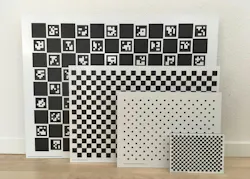
Modern day computer vision has come a long way in establishing itself as a robust means to provide more intelligent feedback in complex tasks. What was initially dominated by classical image processing quickly advanced into a more resilient and smarter framework propelled by the deep learning boom.
Vision systems today span multiple industries including AVs, industrial automation, robotics, and even warehouse logistics. They are the sensory foundation of physical AI, where models interact with the physical world through imperfect sensors. However, throughout its sustained rise, the process of calibrating vision sensors remains largely a one-step process following Zhang’s camera calibration method.
Even with rapid breakthroughs in model optimization, which take headlines by storm, miscalibration of critical sensors can render these models ineffective. Camera alignment effectively ties in with accurate camera-to-world mapping; deviation can quietly degrade vision systems and become significant engineering bottlenecks.
Why Calibration Still Matters
At its core, camera calibration is essentially a mapping problem; how objects in 3D space are mapped onto a 2D image plane to make measurement, observation or inference. From Zhang’s method, the framework is divided into intrinsic and extrinsic properties which are internal sensor properties and outside-world position and orientation (a.k.a. pose), respectively. The procedure is fundamentally a non-linear optimization problem minimizing error between predicted and actual pixels.
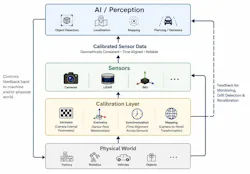
The challenges with computer vision applications compound as they start scaling across industries. A typical vision system architecture relies heavily on both its hardware and software stacks to succeed in the real world. While software stack optimization and model improvement are often cited as critical bottlenecks in vision system design, the middle layer, bridging the two, often presents a much bigger engineering bottleneck.
System calibration resides in this middle layer. Rapidly changing conditions of the real world impact the efficacy of the setup. Deviations in either intrinsic or extrinsic parameters are capable of throwing off overall vision system performance; they either affect the sensor's internal parameters or offset the established mapping relative to its reference targets or both.
When Drift Becomes a Systemwide Problem
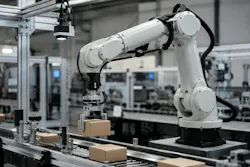
A key example of drift commonly occurring in vision systems in industrial use cases is mechanical drift from vibration. Picture a vision-guided industrial robot arm in a warehouse facility tasked with pick-and-place to sort objects. Essentially this robot arm is following sensor input from its “eyes”—a live-stream camera.
Warehouse and factory environments, however, are notorious for being susceptible to vibration from material handling equipment. Over the course of repeated cycles, under vibrating conditions, such inconsistencies can lead to drift in the sensor’s relative pose to the robot.
Compounded drift increases the reprojection error; a robot which was working as expected for months, can suddenly start mass-failing at its tasks. This is an example of a silent drift, which becomes difficult to identify the root cause of without considerable engineering downtime. Factory operations and warehouse logistics can suffer high yield loss for having a rigid, one-time setup at the onset of commissioning.
Another critical example of calibration drift occurs in a vision system which is rapidly gaining traction; autonomous vehicles. Vehicles, unlike factories and warehouses, are exposed to the unknown where together with system induced drift, they are continuously exposed to environmental variation. A good example of drift occurring is from periodic vehicle maintenance where the vehicle’s internal components are tested for or even replaced to ensure structural integrity. However, there is a risk of micro-shifts of these vision sensors in the process. Even a small shift in camera pose can disrupt extrinsic mapping and cause localization drift. The challenge shifts to significant engineering effort in recalibrating the entire perception stack. Rather than simply recalibrate the shifted sensor, systems diagnostics should be repeated to ensure efficient sensor fusion.
Previous examples demonstrate that challenges in vision system physical alignment are a cross-industry pain point. Whether it be an AV perception system or a warehouse robotics inspection, similar failure modes can affect performance.
It is evident that both environmental variation and sensor constraints affect the middle-layer suite. The real question, however, is what causes existing methods to fail, and why do systems undergo such pronounced drift over time?
Why Static Calibration Fails
A primary flaw is assuming that deployment conditions remain static throughout the lifecycle. Increasingly multi-sensor vision operating across diverse environments cannot rely on the baseline initialization throughout their lifecycle. Multiple factors can degrade geometry and mapping of the system. Physical systems are prone to vibration, mechanical wear, and environmental changes such as lighting and temperature. Modern deployments with dynamic sensors challenge these assumptions and require continuous monitoring throughout operation.
Detecting drift in deployed systems remains a difficult task. Because calibration lies at the intersection of the physical world and the sensing stack, drift can be perpetuated from multiple layers of the system architecture. It becomes difficult to track because the system continues functioning as expected. However, miscalibration often presents itself as unexpected high-level system behavior. A robot will miss a pick and place action due to sensor geometry misalignment. An autonomous vehicle may undergo phantom braking because of inconsistent vision outputs.
Technical troubleshooting often investigates software latency, model performance, or even hardware faults before root-causing drift. Consequently, optimizing system stability is a bigger reliability engineering problem.
As vision systems scale across products, environments, and even factories, deployment is evolving into a broader operational challenge. Performing one-time calibration on a fixed system is a long-solved problem. Yet, operational complexity increases when the system must be maintained over time, especially as they are subject to equipment wear, environmental factors, and system drift. Because every system exhibits a unique drift profile, defining a universal metric is not as straightforward. Therefore, preserving and monitoring the infrastructure becomes the larger engineering bottleneck.
Monitoring Replaces One-Time Commissioning
Despite lack of standardization, newer methods have significantly advanced manual processes used earlier. Today, monitoring and correction methods help maintain calibration throughout deployment. Fixed reference points are periodically compared against an established baseline.
Mobile systems such as warehouse robotics and ADAS on the other hand, rely on both software and hardware diagnostics. Key statistical metrics used to maintain reliable spatial awareness, such as extrinsics and reprojection error, are continuously monitored for deviation.
Moreover, modern sensors also incorporate optimizers which routinely validate sensor intrinsics during operation. Systems also rely on common environmental features including lane markers, road signs and landmarks to estimate drift relative to baseline parameters. Synthetic data further complements these efforts by enabling perception pipelines to be stress tested under changing conditions. Degradation can be difficult to detect until it manifests as measurable performance loss, or in worse cases an operational failure.
However, by simulating variations in sensor poses and environmental effects, engineers can better stress-test system resilience to predict calibration drift.
Maintaining calibration robustness remains a reliability challenge and helps explain the growing demand for perception specialist engineers. Progressively, the challenge is not simply performing calibration but preserving the system’s calibrated state.
While improvements in hardware design reduce susceptibility to drift, software architectures also increasingly incorporate automated diagnostics and health monitoring. Looking forward, there remains potential for substantial improvement in standardizing all operational aspects.
Although researchers and industry leaders propose different methods, there remains little consistency across deployments. Manufacturing, for example, relies on common metrics such as yield, throughput and cycle time; vision systems would similarly benefit from standardized measures of localization consistency and trustworthy perception. Recalibration methods are highly varied, ranging from checkerboards and factory targets to environmental and simulation-based validation.
Greater standardization of these processes would simplify validation, improve interoperability, and help establish more stable frameworks in increasingly complex vision systems.
Calibration Becomes a Reliability Discipline
This trend helps explain the growing demand for vision engineers specific to calibration in the perception stack. Despite improvements in the several layers of the system architecture, calibration has transformed into becoming a core infrastructure problem of vision system design. And although foundational models are rapidly improving, they ultimately rely on sensors which are susceptible to the usual failure modes of deployment.
Because the process is such an involved bottleneck and is evolving from one-time commissioning to lifecycle management, there has been an uptick of dedicated teams working to comprehensively maintain the software stack. Calibration has shifted from a mathematical optimization problem to a broader engineering reliability discipline.
We have come a long way in developing novel methods to evaluate sensor accuracy during deployment. Yet an established calibration framework propels industry convergence towards safer and more reliable physical AI systems.
References
https://calib.io/blogs/knowledge-base/calibration-patterns-explained
https://ieeexplore.ieee.org/document/888718
https://wiki.ros.org/camera_calibration
https://amdmachines.com/blog/calibrating-machine-vision-systems-for-accuracy
https://www.labelvisor.com/detecting-external-calibration-drift-in-adas
About the Author
 Sparsh Gautam
Sparsh Gautam
Sparsh Gautam is a computer vision engineer with expertise in machine vision systems for robotics and industrial automation. His work focuses on vision system design, sensor calibration, perception pipelines, and AI-driven inspection systems for complex perception environments. His technical interests include physical AI, robotics perception, machine vision, and improving the long-term reliability of deployed vision systems. He also serves as a peer reviewer for leading venues in the field, including IEEE Robotics and Automation Letters (RAL), IROS, ECCV, and IJCV.