Edge Processing in Optical Test Systems: Reducing Data Bottlenecks in High-Speed Measurements
Key Highlights
- Edge processing performs computation at or near the data source, enabling real-time analysis and immediate decision-making in optical systems.
- By transmitting only processed results instead of raw data, edge computing significantly reduces bandwidth requirements and storage needs.
- Local analysis enhances system resilience by maintaining operation during network outages and improves security by keeping sensitive data within secure environments.
- Modern hardware like FPGAs and system-on-chip solutions make edge processing accessible and cost-effective for various optical applications.
- Use cases such as defect detection in manufacturing, spectral analysis in research, and biomedical imaging demonstrate the practical benefits of edge processing in photonics.
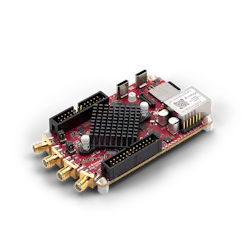
Modern optical test systems often generate data much faster than traditional processing infrastructure can handle. Labs experience the bottleneck immediately as storage systems fill up, analysis falls behind and decision-making slows to a crawl. Edge processing addresses this challenge by performing computation at the measurement source to deliver insights with significantly reduced delay.
The Challenge of High-Speed Data Acquisition
High-resolution sensors and rapid acquisition rates define modern optical test systems, particularly in applications like hyperspectral imaging, interferometry, and advanced spectroscopy. Each measurement cycle produces detailed information that must be evaluated immediately to maintain productivity.
A data bottleneck happens when processing capacity cannot keep pace with the volume generated, leading to delayed results and extended processing times that interrupt workflows. For example, an optical measurement system that captures 10,000 frames per second — depending on resolution, bit depth and whether compression is applied — can quickly exhaust local storage while waiting for downstream analysis.
The time between measurement and usable results can stretch from minutes to hours, rendering real-time applications quite challenging.
Traditional approaches involve sending raw data to centralized servers or cloud platforms, which worked fine when measurement speeds were lower and datasets were smaller. However, today's high-speed optical instruments can generate volumes that exceed network bandwidth, resulting in substantial latency between measurement and actionable insight. That gap widens as optical systems become faster and more precise.
Related: How to Build an AI-Enabled Vision System
Traditional Data Handling vs. Edge Processing
The shift from centralized to distributed processing represents a fundamental change in how labs handle measurement data. Understanding both approaches clarifies why edge computing has become essential for modern optical applications.
The Limitations of Centralized Processing
Centralized processing requires transmitting raw measurement data across networks to remote servers. This creates multiple points of failure and delay. The combined overhead of data transfer, queueing, and downstream processing can add seconds or minutes to the turnaround time, making real-time quality control challenging in production environments. Overhead from each transmission accumulates across thousands of measurements per day.
Bandwidth costs escalate quickly when systems transmit continuous high-resolution data streams and overwhelm the typical network infrastructure. Organizations must either throttle acquisition rates or invest heavily in network capacity. Either choice comes with substantial costs in the form of either reduced measurement capabilities or infrastructure expenses.
Security vulnerabilities multiply when sensitive measurement data travels across networks. With centralized storage creating attractive targets for unauthorized access, data protection becomes increasingly difficult.
Network dependencies mean any disruption in connectivity can pause the entire measurement workflow and reduce system reliability. Research labs that handle proprietary data may face additional compliance burdens when transmitting information beyond their local systems.
The physical distance between sensors and processors also introduces unavoidable delays. Even fiber-optic connections cannot eliminate the basic constraint that data must travel before any processing work begins. For applications that require millisecond response times, this latency can render centralized architectures unsuitable regardless of bandwidth availability.
Related: How Silicon Photonics and FMCW Transform LiDAR Technology
A New Paradigm with Edge Processing
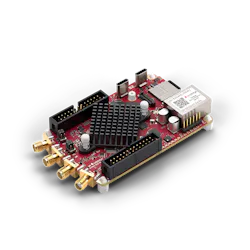
Edge processing performs computation at or near the data source instead of in distant centers. By analyzing measurements locally, the system can extract relevant features and transmit only processed results. This method inverts the traditional model where raw data moves to processing power.
The core advantage lies in moving intelligence closer to sensors. Within milliseconds of data capture, processing can activate immediate feedback loops. With real-time analysis available, systems can then adjust acquisition parameters, trigger alerts, or control downstream operations without waiting for remote processing to complete. The result is a closed-loop system that can optimize itself.
Modern edge platforms offer considerable computational capability. Through multi-core processors, dedicated signal processing units, and reconfigurable logic blocks, complex algorithms can be handled locally. That level of edge processing power can now handle many workloads that previously required centralized infrastructure. Sophisticated analysis then becomes feasible, even without relying on remote resources.
How Edge Processing Alleviates Bottlenecks
Implementing computation at the measurement edge addresses the challenges traditional architectures experience. The benefits extend beyond simple speed improvements to enable entirely new capabilities.
Real-Time Analysis at the Source
Local processing delivers results within the measurement cycle itself. Optical inspection systems can detect defects and reject parts immediately rather than discovering problems hours later in batch analysis.
Manufacturing environments also benefit from the instant feedback. For example, a vision system analyzing surface defects can halt production lines in milliseconds when it spots flaws, thereby preventing waste. The system can make autonomous decisions without waiting for cloud analysis or human intervention. As quality trends evolve, production managers can receive instant alerts instead of discovering issues after producing hundreds of defective units.
Research applications gain similar advantages. During spectroscopy experiments, parameters can be adjusted mid-acquisition based on preliminary findings. Instead of waiting hours for post-processing, scientists can receive processed spectra during measurements and accelerate experimental iteration.
Reduced Data Transmission
Edge processing can compress data volumes dramatically. Instead of transmitting every pixel from a high-speed camera, the system sends extracted features, measurements or pass/fail decisions. In feature-extraction or pass/fail workflows, a gigabyte of raw imagery might be reduced to kilobytes of relevant metrics. The exact reduction depends on the application and the complexity of the information retained.
Labs can run multiple high-speed optical systems at once without overloading the network. Storage needs also drop since only processed results require long-term archival. Entities can keep using existing network infrastructure instead of paying for costly upgrades.
Filtering also improves data quality. Edge algorithms remove noise, correct aberrations, and normalize measurements before transmission. Later analysis works with clean and calibrated data instead of raw sensor readings that need extensive cleanup. Fixing these issues early prevents errors from compounding through each processing stage, leading to more accurate final results.
Improved System Resilience and Security
Local processing reduces dependence on network connectivity. Systems continue to function even during network outages and maintain productivity in industrial environments where downtime is costly. Measurement and analysis proceed normally with results ready and queued for transmission when connectivity returns.
Security improves because sensitive raw data never leaves the local environment. With only processed results traversing networks, less information is revealed about proprietary processes or confidential research. In regulated industries, this architecture naturally aligns with data governance requirements. Because detailed measurement data remains within secure local systems, brands can maintain tighter control over their intellectual property.
Edge simplifies system operations by eliminating the need to separate infrastructure for acquisition and processing. A single integrated platform handles both functions, reducing IT overhead and streamlining troubleshooting. Rather than coordinating between distributed components, technicians can work with unified systems.
Practical Implementation in Optical Systems
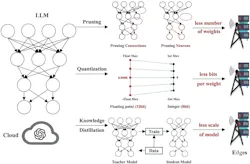
Modern hardware makes edge processing accessible even for budget-conscious labs. Field-programmable gate arrays, systems-on-chip and specialized processing boards deliver substantial computational power in compact packages. These components integrate directly with optical sensors to create self-contained measurement systems.
Successful implementation requires a balanced system architecture. Processing power must match data generation rates without introducing new bottlenecks at any stage.
A smart architecture balances the low latency of edge processing without overloading any single component — a strategy that has proven effective in real-world applications. For instance, student researchers using a Red Pitaya board implemented a predictive-maintenance pipeline that classified vibration signatures with 98.82% accuracy, demonstrating that sophisticated analysis is achievable on accessible hardware.
Cost considerations favor edge approaches for many applications. By adopting edge processing, enterprises avoid ongoing cloud computing fees and network infrastructure investments. The total cost of ownership is often lower for edge systems, thanks to reduced network expenses and improved operational efficiency.
Standard libraries also support common optical processing tasks, reducing the need for custom code. With many platforms offering familiar programming environments, researchers can port existing algorithms to edge hardware without learning specialized languages. Such accessibility lowers the barrier to adoption for labs transitioning from centralized processing.
Relevant Use Cases in Photonics
Different photonics applications demonstrate how edge processing solves discipline-specific challenges. Machine vision systems on production lines process thousands of images per second to detect defects in manufactured components. Edge processing enables these systems to analyze images locally and trigger immediate responses.
For example, a pharmaceutical inspection system can verify tablet quality, check packaging integrity and ensure proper labeling without transmitting high-resolution images to remote servers. The system operates continuously at line speed and can inspect every unit without creating data management burdens.
Spectroscopy applications analyze material composition through interactions with light. Through on-the-fly spectral analysis, edge processing identifies chemical signatures as measurements occur. Materials research labs can screen hundreds of samples daily, with systems automatically flagging compositions of interest without accumulating analysis backlogs. This enables researchers to focus on promising candidates.
Interferometry measurements map surface topology with nanometer precision to generate dense spatial datasets. When these interference patterns are processed locally, immediate surface maps become available. In manufacturing facilities, this capability verifies component dimensions during production, catching deviations before they accumulate into costly batches of defective parts. Real-time dimensional data enables quality assurance teams to make rapid process corrections.
Optical coherence tomography in biomedical research benefits from immediate image reconstruction. Based on initial results, systems can adjust scanning parameters to optimize image quality for specific tissue types. During acquisition sessions, researchers obtain usable data rather than discover problems later during processing.
A Final Take on Intelligent Measurement
Edge processing has shifted from a specialized technique to an increasingly important capability for modern optical measurement. The approach addresses challenges that centralized systems struggle to handle at the speeds modern applications demand, enabling real-time analysis that was previously out of reach.
Labs and manufacturers now generate insights directly at the measurement source, turning data collection into immediate decision-making that drives efficiency and discovery.
Related: AI Trends Shaping Future of Industrial Inspection and Robotics
About the Author
 Črt Valentinčič
Črt Valentinčič
Passionate about embedded technologies, scientific instrumentation, and engineering-driven startups, Črt Valentinčič co-founded Red Pitaya in 2013 after years of experience developing advanced measurement and computing systems. His vision was to create STEMlab, a versatile, open-source flagship platform with integrated test and measurement capabilities that could replace bulky lab equipment and make precision engineering more accessible. Today, Red Pitaya devices are used in applications ranging from laser-based methane monitoring to quantum optics research, and have been adopted by world-class organizations including NASA, CERN, MIT, Stanford, and leading technology companies such as Apple and Siemens. With deep expertise spanning hardware architecture, firmware, and software development, Valentinčič continues to drive Red Pitaya’s product strategy and the evolution of its open-source ecosystem.